


A Healthy Puppy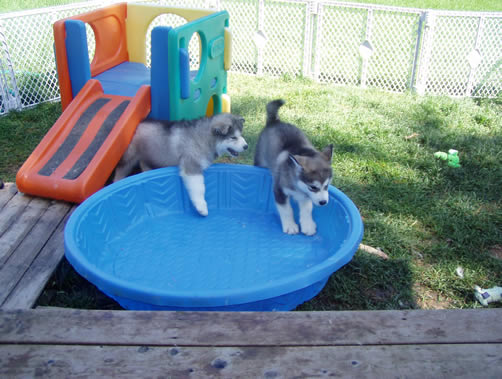
Want to know if your puppy is healthy? First look at it's environment...is it clean? Is the mother in good health (don't go by coat as all bitches blow out their coat when nursing and look pretty skanky!!). Mom shouldn't be too thin, and though her hair may be short, it shouldn't be patchy or look too dry. Mom and pups eyes should look bright, not runny or cloudy. Mom and pups feet should be neatly trimmed and she shouldn't have too many coat blowing tufts (she may not be too cooperative about grooming, after all she's a busy girl, but there should have been an effort made!).
When you visit your veterinarian, be sure to bring up any questions or concerns regarding your puppy's health. It's very common for puppies to get moist dermatitis (little pimples around the belly area). Just keep an eye on it to make sure it doesn't spread or get infected (really red and raw).
A healthy puppy:
- Eyes should be bright and clear, no gunk or oozing
- Ears should be clean and have no discharge, odor and redness. Ear problems are painful and can cause hearing loss.
- Nose should be clean, without discharge or sores. It can be warm or dry (cold wet nose is an old wive's tale).
- Puppy breath should have that "pee" smell. (some love it, some can't stand it). Gums should be pink. Teeth should be free of tartar or plaque. Mouth and lips should be free of sores or growths. Bite should not interfere with eating in any way.
- Coat should be shiny, clean and even. Sometimes black and white malamute puppies will have a dullish looking coat - that's ok.
- Active, playful puppies are rarely overweight. A pot belly may mean the puppy hasn't been treated for worms.
- A nappy looking coat may mean the puppy is going to be a wooly. The fur will tend to tuft around the ears. Wooly puppies tend to look like they need a good hairdresser after a lot of play.
- Many puppies will tend to get diahrrea for a day or so upon going to their new homes. This is usually just a stress reaction or due to changing food. Ask your breeder for their advice on how to handle this.
Unhealthy Puppy Signs
- Bloated stomach, too thin or fat
- Runny eyes, nose or ears
- Scruffy dull coat
- Persistent lack of appetite
- Reluctance to move
- Diarrhea (more than 24 hours) - especially if it contains mucus, blood, is watery or has small flecks (worms) in it.
- Drinking excessive amounts of water or not wanting to drink
- Coughing or sneezing
- Constant scratching or licking
- Head shaking and pawing ears
- Straining to urinate or bloody urine may indicate a painful infection of the urinary tract.
- Loss of hair
- Pain and discomfort, abdomen or elsewhere
- Vomiting - sometimes puppies will vomit from stress, but if they vomit more than once, large volumes, or it contains blood get it checked out.
- Straining to poop...constipation.
Puppy Growth Schedule
- Gestation can range from 59-66 days but the average is 63 days.
- Rear dewclaws (if they have them - many lines of Mals don't) are removed at 2-4 days of age. Unless working in harness extensively, front dew claws are left on to act as "thumbs".
- Eyes and ears are sealed at birth and begin to open about 10 days.
- Puppies are born without teeth and first ones appear at 3-4 weeks.
- Weaning can begin at 3-4 weeks, though may continue much longer - depending on the mom. Most pups are weaned at 4-6 weeks.
- Dogs lose their baby teeth and begin to acquire permanent ones at 4-5 months. At around four months of age -- the 28 puppy teeth are replaced with 42 adult canine teeth, including the molars.
Puppy Teeth and Bites
Puppies will sometimes fail to lose their baby or first set of teeth. Often this is the large canines. If these teeth are not lost before 5-7 months of age they prevent the adult teeth from coming in correctly. Crowding occurs pushing the adult teeth too far forward. Improper bite not only affects chewing, but it also affects the natural cleaning action of the teeth as they are used chewing rawhides and (safe) bones. In Malamutes, a correct bite is where the front teeth fit tightly over and in front of the bottom teeth - they should mesh together perfectly. Common problems are "overshot" or buck teeth, and "undershot" where the lower teeth are in front of the top teeth. Neither is correct. If baby teeth do not come out on their own by 6 months of age, or seem to be interfering with the bite even sooner, it is best if they are removed by your veterinarian.
There is not much you can do when a puppy is teething to help with the pain. We would freeze wet washcloths and let them chew on them (with supervision). There are also good puppy teething toys available to give the puppy something to chew on. And they WILL want to chew..so keep things picked up you don't want chew marks on ...like shoes, kids toys, socks, towels and clothing. At this age it's a good time to get them used to letting you examine their mouth and brushing teeth if you plan to do that. Use a toothbrush with the softest bristles you can find. Human toothbrushes are okay. Brush using just warm water, or use a toothpaste made for dogs only. (they come in cool flavors like chicken and beef!) Check between the teeth and lips, roof of the mouth, and gums but watch out for those razor sharp puppy teeth!
Do not use topicals on the puppy's mouth such as baby Orajel. Benzocaine has been associated with a rare but serious condition called methemoglobinemia, which greatly reduces the amount of oxygen carried through the bloodstream. In the most severe cases, the condition can be life-threatening for human babies, so it stands to reason this may be the case with puppies too.
Puppy Language
You wouldn't think of puppies having a language but they do! Even as newborns different squeals can mean very different things if you take the time to pay attention. There is the "can't find the nipple" whine....the "I'm hopelessly lost" cry....the "I'm hungry looking for a nipple" fuss...the "why isn't this nipple working" grunt.....the "Help mommy is sitting on me" scream....the "I'm getting chilled" cry....and more. I don't know if this is true of all dog breeds, but after having slept next to many moms with newborns I'm beginning to tell the difference and they ALL do it. Wouldn't it be cool if WE had a universal language like that?
PUPPY CLASSES ONLINE AT UDEMY


